You don't need a wall of gleaming tools to keep a home in good shape. Most of the repairs and small projects that come up in a normal year lean on the same short list of items, and a well-chosen starter kit will carry you a long way before you ever need anything specialised. The trick is buying the right things once, rather than a drawer full of cheap tools you replace within a year.
This is the kit I'd hand a friend moving into their first place. It's built around what actually gets used, keeps an eye on the budget, and leaves room to grow. Buy it piece by piece if you like; there's no prize for owning everything on day one.
A handful of hand tools quietly do most of the work in any home. These are worth having before anything with a battery or a plug.
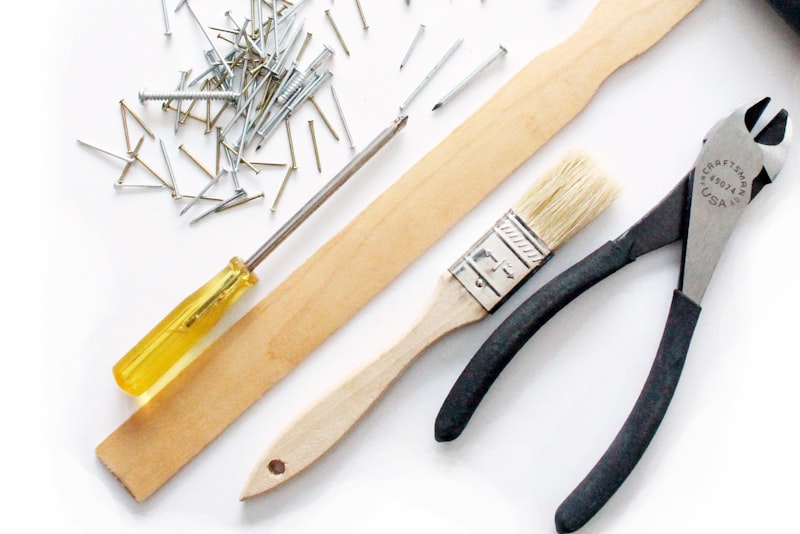
- A claw hammer around 16 ounces, heavy enough to drive a nail but light enough to control.
- A set of screwdrivers, or a single driver with interchangeable bits, covering the common flathead and cross-head sizes.
- An adjustable wrench, which spares you from buying a full spanner set on day one.
- A retractable tape measure of at least five metres, with a lock that actually holds.
- A utility knife with a retracting blade and a few spares.
- A spirit level, even a short one, so shelves and frames sit straight.
- A pair of pliers, ideally combination pliers that also cut wire.
That short list will hang pictures, assemble flat-pack furniture, tighten a wobbling chair, and handle a surprising number of small emergencies. Add a torch and a pencil and you've covered the humble basics most jobs quietly depend on.
Choose where to spend and where to save#
Not every tool deserves the same money. The sensible approach is to spend where quality shows and save where it barely matters.
Put your money into the tools you hold for long stretches and rely on for accuracy: a comfortable hammer, decent screwdrivers whose tips don't round off, sharp cutting tools, and a tape measure that reads true. A cheap screwdriver that strips its own tip on the first stubborn screw isn't a bargain; it's a job half-finished and a knuckle at risk.
Meanwhile, you can happily go budget on things you'll use once in a blue moon, like a basic set of hex keys or a putty knife. Buy those cheaply, and if one ever wears out from heavy use, treat that as a signal you've earned the better version.
A useful rule for beginners: buy cheap first only for tools you're unsure you'll use. If a bargain tool wears out because you reached for it constantly, that's the best possible reason to upgrade, because now you know it earns its place.
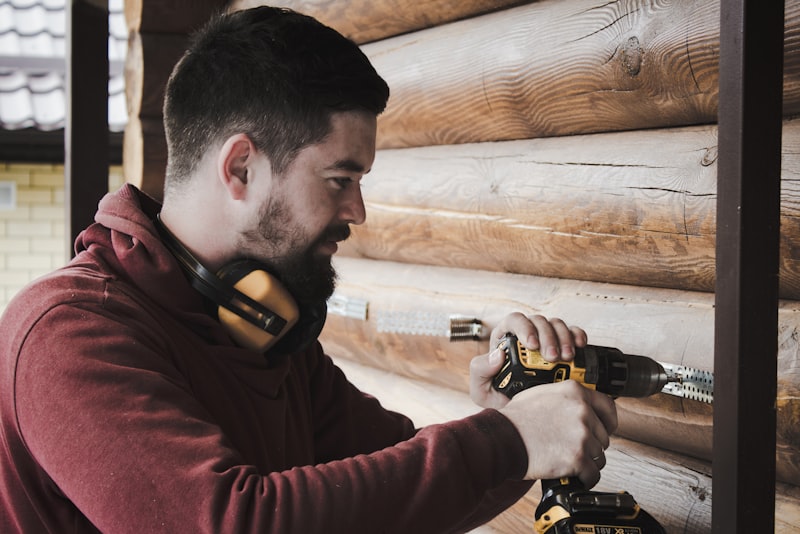
If you buy a single power tool, make it a cordless drill/driver. It drives screws, bores holes, and with the right accessory it can sand, stir paint, or mix filler. Nothing else in a starter kit covers so much ground for the money. A mid-range 18-volt model with two batteries is plenty for home use, and the second battery means you're never stranded waiting for a charge.
Learn to use it properly from the start rather than picking up bad habits. Our guide on using a cordless drill safely covers the clutch, speed settings, and the steady technique that keeps holes clean and fingers intact. Once the drill feels natural, a compact circular saw or a random-orbit sander are the usual next steps, but neither is urgent for a first kit.
There's also no rush to fill the shelf. A saw you'd use twice a year can be hired for an afternoon, and a sander borrowed from a neighbour for one job tells you whether you'd get the use out of your own. Buying big tools you rarely touch is how garages fill with dust-gathering boxes, so let genuine, repeated need pull each new purchase rather than the promise of a project you might tackle someday. The same goes for second-hand tools: a solid old hand plane or a well-made hammer from a car-boot sale is often better value than a shiny new budget one, provided you check it over first.
A few unglamorous items round out a kit and save repeat trips to the shop. Keep a small selection of fixings on hand: a jar of assorted screws, some wall plugs in a couple of sizes, and a few picture hooks. Add a tube of multi-purpose filler, a roll of painter's tape, some sandpaper in a coarse and a fine grade, and a packet of cable clips.
Storage matters more than people expect. A simple toolbox or a wall-mounted rack keeps everything findable, which sounds trivial until you're hunting for a screwdriver with paint drying on the wall. Keeping tools organised also keeps them in good condition; our notes on storing and maintaining your tools explain how a little order extends their working life.
It's worth keeping these consumables topped up, too. Running out of the right screw halfway through a Sunday job, with the shops shut, is a small but familiar misery. A quick glance at your fixings jar before you start a project, and a habit of replacing what you use, spares you that particular frustration more often than you'd think.
Buy safety gear at the same time, not later#
This is the part first-time buyers skip, and it's the one I'd never leave out. Protective gear is cheap, and it belongs in the kit from the very first purchase, not added after a near miss.
At minimum, get safety glasses that wrap slightly around the sides, a pack of disposable dust masks rated for fine particles, and a pair of well-fitting work gloves for handling rough or sharp materials. Add a set of ear protection before you use anything loud like a saw. None of it costs much, and it turns a category of avoidable injuries into non-events. For the full picture on what to buy and when to wear it, see our guide to choosing the right safety gear.
Growing the kit at your own pace#
The best kit is the one that matches the work in front of you. Start with the hand tools and a drill, keep the safety gear beside them, and let real jobs tell you what to buy next. When you find yourself borrowing the same tool from a neighbour for the third time, that's your cue to buy it, and by then you'll know exactly which features you actually need.
Resist the temptation of the giant boxed set with a hundred pieces you'll never open. A dozen good tools you understand will always beat a hundred you don't. Build slowly, buy well, and in a year or two you'll have a kit that fits your home and your hands perfectly, with barely a wasted purchase along the way.