Safety gear is the least exciting thing you'll buy for your home, and the most important. A hammer or a drill gets all the attention, but a two-pound pair of safety glasses is what stands between a flying chip of wood and a trip to A&E. The good news is that protecting yourself is cheap, simple, and quick once it becomes a habit.
The aim here isn't to wrap you in armour for hanging a picture. It's to help you understand which hazards each project brings, and match the right protection to the job. Get that pairing right and you'll barely notice the gear, which is exactly how it should feel.
Protect your eyes first, and almost always#
If you buy one piece of safety gear, make it eye protection. Eyes don't heal from a driven splinter or a splash of caustic cleaner, and the hazards are everywhere: chips when you chisel, dust when you drill overhead, grit when you sand, and stray fragments when you cut. It's the one item worth wearing for the large majority of jobs, even quick ones.
Look for glasses marked to a recognised impact standard rather than fashion sunglasses. A wraparound shape shields the sides, where debris loves to sneak in. If you wear prescription glasses, buy safety glasses designed to fit over them, or a pair of goggles that seals around the whole area. For anything that throws a lot of material, like using a grinder, full goggles beat open-sided glasses every time.
For the heaviest jobs, a full face shield adds another layer, protecting your whole face from larger flying pieces when you're grinding metal or cutting overhead. A shield doesn't replace glasses, though; wear both, since a shield can be lifted or knocked and the glasses stay put underneath. It's the kind of doubling-up that feels excessive right up until the day it saves you a scar.
Cheap eye protection you'll actually wear beats expensive gear that lives in a drawer. Comfort is a safety feature, because the pair you find bearable is the pair that's on your face when something flies.
Save your hearing before it's too late#
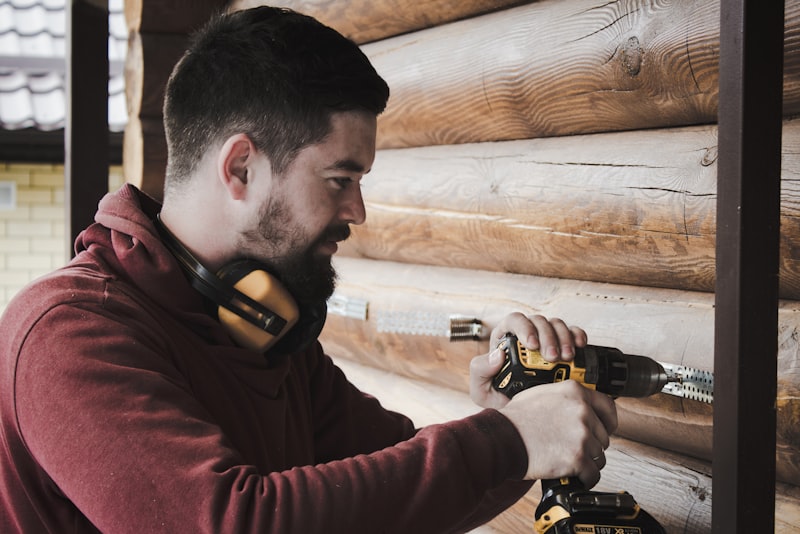
Hearing loss is sneaky. It doesn't hurt in the moment, it creeps in over years, and once it's gone it doesn't come back. Power tools, especially saws, routers, and impact drivers, get loud enough that regular exposure adds up, so treat ear protection as standard whenever a tool makes you want to raise your voice over it.
You have two easy options. Foam earplugs are cheap, pocketable, and fine for occasional use, as long as you roll and insert them properly so they actually seal. Over-ear defenders are quicker to put on and take off, which makes them the practical pick if you're stopping and starting a lot. Either works; the best one is whichever you'll reliably reach for.
Keep your lungs out of the dust#
Lung protection gets overlooked because the damage is invisible and slow. But fine dust from wood, plaster, and especially old paint or masonry can be genuinely harmful to breathe, and a good mask is a small price for keeping it out.
Choose the mask by the job:
- A basic dust mask handles nuisance dust from light sanding or sweeping.
- A fitted respirator rated for fine particles is worth it for heavy sanding, cutting board materials, or plaster work.
- A respirator with the right cartridges is the one to use for solvent fumes, spray paint, or strong chemicals.
Whatever you pick, it only works if it seals to your face. Facial hair breaks the seal, so a snug fit against clean-shaven skin matters. If you can smell the thing you're trying to filter, the mask isn't doing its job and you need a better fit or a different type.
Remember, too, that the mask is your second line of defence, not your first. The best way to deal with dust and fumes is to make less of them and move them away: open windows and doors, work outdoors where you can, and use a vacuum or extractor on tools that make a lot of fine dust. Ventilation and a mask together keep far more out of your lungs than either does alone.
Match hand and body protection to the task#
Gloves are genuinely useful for the right jobs and genuinely dangerous for the wrong ones. General-purpose work gloves protect against splinters, sharp edges, and rough materials when you're carrying timber or clearing debris. Chemical-resistant gloves belong on for cleaning products, adhesives, and paint stripper.
But here's the important exception: never wear loose gloves near a rotating tool like a drill press or a spinning bit, because the fabric can catch and pull your hand straight in. For those tools, bare hands with good eye protection are safer. Knowing when to take gloves off is as much a skill as knowing when to put them on, a point we stress in our guide to using a cordless drill safely.
Round out the picture with sensible footwear. Closed, sturdy shoes protect your feet from dropped tools and stray nails far better than trainers or bare feet. If you regularly handle heavy materials, toe-capped boots are a worthwhile step up.
Store it where you'll actually use it#
The best gear in the world does nothing if it's buried in a box across the room. Keep your everyday protection, the glasses, ear defenders, and a few masks, right beside your tools, so putting it on is as automatic as picking up the drill. A small hook or a shelf near the workbench is all it takes.
Check the condition of your gear now and then, too. Scratched glasses that blur your view, crushed earplugs, and stretched-out masks all quietly stop working. Replace them; the cost is trivial against what they protect. If you're setting up storage for your kit, our guide on storing and maintaining your tools covers keeping the whole workspace tidy and ready.
Building the habit that keeps you whole#
None of this asks much of you. It's a pair of glasses before you drill, ear defenders before you saw, a mask before you sand, and closed shoes on your feet. The gear is inexpensive, the routine takes seconds, and the injuries it prevents range from irritating to life-changing.
Think of protective gear not as a sign you expect things to go wrong, but as the quiet confidence that lets you get on with the work. The most experienced people I know are also the most consistent about wearing it, precisely because they've seen what happens when someone doesn't. Start every project by asking what could reach your eyes, ears, lungs, and hands, then put on the answer. That single question, asked out of habit, is the best safety tool you'll ever own.